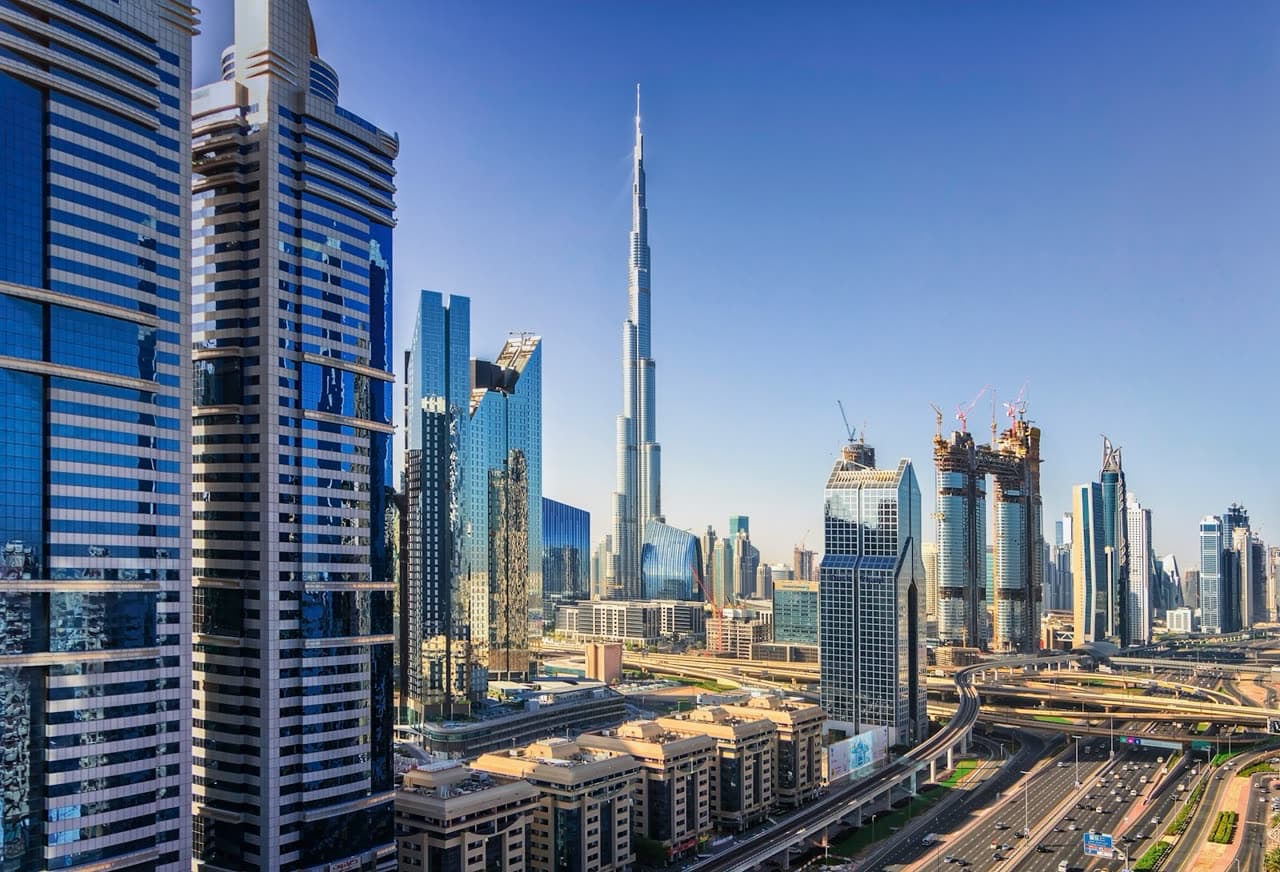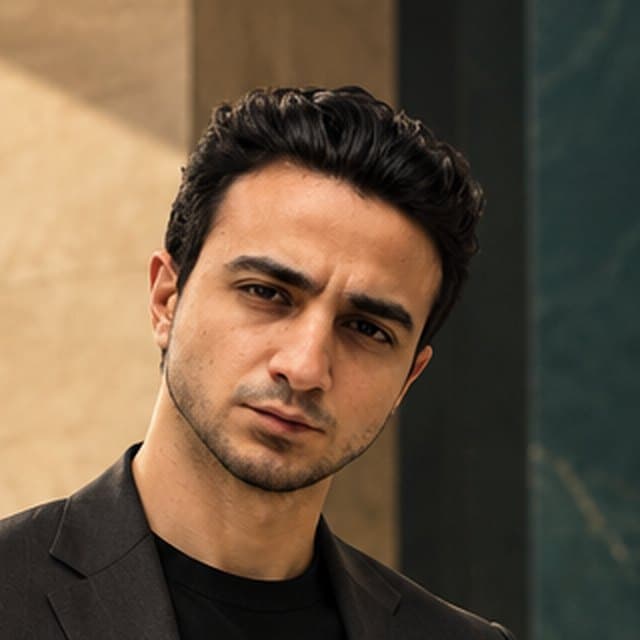
Aramex was born in 1982. Its founders were Fadi Ghandour, who had recently graduated from George Washington University, and William Kingson, an entrepreneur with long experience in the airline industry. According to The National, the company started in two places at once — Jordan and New York; for many years its headquarters were in Amman, and today Aramex is a Dubai-based company.
The timeline matters less than a few decisions that keep recurring in this story: what to build the first business on, where to put the money, and how to treat the stock market.
Start as a partner, not a rival
According to its 1997 prospectus, from 1982 to 1987 Aramex built its revenue and its network of offices in the Middle East on a few large wholesale accounts. These were international express companies — Airborne Express, Emery, Purolator, UPS: they accepted parcels addressed to the region and handed local delivery to Aramex. The end customer remained the partner’s customer.
Only in 1987 did the company begin building its own direct sales. The logic is clear: a large partner brings regular volume and quality standards on which a network can grow — and only then do you take that network to market under your own name.
A network instead of heavy assets
In its annual report to the US regulator for 2000, Aramex describes itself as a non-asset-based provider of transportation services: its main cost is purchased transportation — capacity bought from airlines and other carriers. The money went not into aircraft but into offices, people and a shipment-tracking system.
The second pillar was alliances. Aramex was a founding member of the Overseas Express Carriers network, later renamed Airborne Alliance — a group of independent express companies, each of which knew its own market. That let a regional company offer its clients worldwide delivery without building it alone.
Nasdaq: capital ahead of the rest
In January 1997 Aramex listed one million shares on Nasdaq at $7 each, becoming the first company from the Arab world to trade on an American stock exchange. For a regional logistics business, this meant access to capital and to the trust that public reporting brings.
Hard years lay behind it. In an interview retold by MENA Startup Digest, Ghandour named cash as the main problem of the early years: paying salaries always came first for him.
Leaving the exchange — and returning closer to home
Being public did not solve everything. Filings with the US regulator show that in 2001 one potential buyer suggested around $10 a share, and Aramex declined. After 11 September 2001 that interest disappeared: the buyer cited instability in the region — for a company headquartered in Jordan that earned more than 70% of its revenue in the Middle East.
In January 2002 Rasmala Buyout Fund, a fund co-organised by Arif Naqvi, launched a tender offer at $12 a share. Ghandour joined the buyers, received 25% of the voting power in the new structure and, while he remained chief executive, kept day-to-day control of the business. In 2005 Naqvi himself, by then head of Abraaj Capital, spoke of Aramex as a company Abraaj had bought in 2002.
That same year Aramex returned to the market — this time in Dubai. Arab International Logistics held an IPO that was oversubscribed roughly 80 times, then bought Aramex from Abraaj for $185.4 million and listed on the Dubai Financial Market. Ghandour became its chief executive.
Handing over — and investing in the next generation
In April 2012 Ghandour announced that he would step down as chief executive by the end of the year; Hussein Hachem succeeded him, and the founder became vice chairman of the board. In 2016 he sold his remaining 9.9% stake in Aramex and, according to Argaam, planned to spend more time supporting technology start-ups.
He had been doing so for years. Ghandour was one of the founding investors of the Arab web portal Maktoob, which Yahoo bought in 2009. In 2010 Wamda was launched — a platform for the region’s entrepreneurs, with Ghandour as chairman of its board — and in 2015 Wamda Capital announced a $75 million fund for growth-stage start-ups. The experience of one company turned into capital and know-how for many.
What to take into your own business
The scale is different, but the principles travel:
- Start as a partner to the big players: their volume and standards help you grow a network of your own.
- Invest in what sets you apart — people, processes, market knowledge — and buy the capacity that can be bought.
- A stock exchange or an investor is a tool: choose a capital market that understands your business, and keep control of operational decisions.
- Prepare the handover early: a strong company should run without its founder in the chief executive’s chair.
Sources
- SEC — Aramex International Ltd, prospectus (424B1), January 1997
- SEC — Aramex International Ltd, annual report on Form 20-F for 2000
- SEC — Aramex International Ltd, Schedule 14D-9 (tender offer), January 2002
- Zawya (WAM) — AIL approves acquisition of Aramex
- The National — Aramex chief steps down after 26 years
- Gulf News — Aramex founder to quit CEO's post by year-end
- Wamda — Fadi Ghandour to step down as CEO of Aramex
- The National — Aramex co-founder Fadi Ghandour sells all his shares
- Argaam — Aramex founder to invest in tech startups after stake sale
- Wamda — Wamda Capital announces launch of regional growth stage venture fund
- Al Jazeera — Yahoo buys Maktoob
- MENA Startup Digest — From Cash Flow Crises to a NASDAQ IPO: Aramex Founder Fadi Ghandour
- Wikipedia — Aramex
- Wikipedia — Fadi Ghandour
Facts are based on public sources; views and conclusions are by the JVA Consulting editorial team. This is not legal, tax or investment advice.